
Waking Up at 3am? Perimenopause Insomnia Guide & Tips
Tired of waking up at 3am? Learn why perimenopause sleep problems happen and discover a practical 14-day tracking method to reclaim your rest tonight. Perimenopause Insomnia.
Perimenopause Compasss
1/26/20268 min read

Waking Up at 3am? Navigating Perimenopause Insomnia and Reclaiming Your Rest
If you have found yourself wide awake in the "witching hour"—that quiet, frustrating window between 2 a.m. and 4 a.m.—you are far from alone. For many women in midlife, the most disruptive symptom isn't the daytime hot flash or the irregular cycle; it is the sudden, consistent experience of waking up at 3am perimenopause. You might wake up feeling "wired but tired," with your mind racing through tomorrow's to-do list while your body feels like it has just run a marathon.
These middle-of-the-night wake-ups are a hallmark of the menopausal transition, often referred to as sleep maintenance insomnia. While it can feel like your body is working against you, these shifts are actually a biological response to a system in recalibration. At Perimenopause Compass, we believe in "tracking patterns, not perfection." Understanding the why behind your sleep disruptions is the first step toward finding a calm, sustainable solution.
This post is designed for educational purposes only. We do not diagnose or treat conditions, but we do provide the tools you need to understand your unique patterns. By using a "track → test → next step" method, you can move away from the frustration of lost sleep and toward a practical plan you can discuss with your healthcare provider.
What 3AM wake-ups can look like in perimenopause
When we talk about perimenopause sleep problems, it is helpful to distinguish between "sleep onset insomnia" (trouble falling asleep) and "sleep maintenance insomnia" (trouble staying asleep). In perimenopause, many women find they can fall asleep easily due to sheer exhaustion, only to be jolted awake a few hours later.
Middle-of-the-night waking often presents as:
Waking up hot or damp: You may not have a full drenching night sweat, but you feel a surge of heat that makes it impossible to stay under the covers.
Racing thoughts or "3 a.m. anxiety": Your brain suddenly switches on, often focusing on worries or small stressors that seem magnified in the dark.
Frequent bathroom trips: Known as nocturia, you might feel a sudden urge to use the bathroom, which then makes it harder to settle back down.
Dry mouth or thirst: Waking up feeling parched can be a side effect of shifting temperature regulation.
Restless sleep: A feeling that you are "hovering" in light sleep rather than reaching the deep, restorative stages.
Multiple awakenings: Waking up every 90 to 120 minutes, feeling like you never quite "clicked" into a long sleep cycle.
Why you might be waking up at 3AM (simple, high-level)
The reason for waking up at 3am perimenopause is rarely just one thing. It is usually a "perfect storm" of hormonal shifts and the body's stress response.
Hormonal Recalibration: As estrogen and progesterone fluctuate, they affect the brain's sleep-wake centers. Progesterone, in particular, has a calming, sedative effect; when it drops, sleep becomes lighter and more fragmented.
Temperature Regulation "Glitches": Estrogen helps regulate your internal thermostat (the hypothalamus). When levels dip, your brain may incorrectly perceive that you are overheating, triggering a "cooling" response that jolts you awake—sometimes even before the sweat begins.
The Cortisol Spike: Normally, cortisol levels stay low at night and rise gently in the morning to wake you up. During perimenopause, hormonal instability can cause cortisol to spike prematurely around 2 a.m. or 3 a.m., leaving you alert when you should be resting.
Blood Sugar Dips: If your blood sugar drops too low overnight, your body releases adrenaline and cortisol to compensate. This survival mechanism wakes you up instantly.
Stress and the HPA Axis: Midlife often brings high external stress. Chronic stress overstimulates your stress response system (the HPA axis), making your brain "hyper-vigilant" during sleep transitions.
According to The Menopause Society (NAMS), sleep disturbances affect 40% to 60% of women during the transition. Understanding that this is a recognized physiological event can help lower the anxiety that often keeps the cycle going.
Common triggers/patterns worth tracking
You do not need to track every single detail of your life, but starting simple can help you see which variables are tied to your best and worst nights.
Alcohol timing: Even one glass of wine close to bed can disrupt sleep architecture and trigger 3 a.m. wake-ups.
Caffeine cutoff: For some, caffeine at 10 a.m. can still affect cortisol rhythms 14 hours later.
Late/heavy dinner: Large meals or high-sugar foods before bed can cause the blood sugar dips mentioned above.
Spicy food: These can raise core body temperature and increase the likelihood of night sweats sleep.
Stress day rating: Was it a "high-pressure" day? Stress has a cumulative effect on nighttime cortisol.
Bedroom environment: Is the room too warm? A room above 68°F can be a major trigger for perimenopause insomnia.
Late workouts: Vigorous exercise within 3 hours of sleep can keep your core temperature elevated.
Screen exposure: Blue light in the hour before bed suppresses melatonin production.
Hydration/bathroom trips: Tracking when you stop drinking fluids can help minimize nocturia.
Cycle phase: Do your wake-ups happen mostly in the week before your period?.
What to track for 14 days (simple daily log)
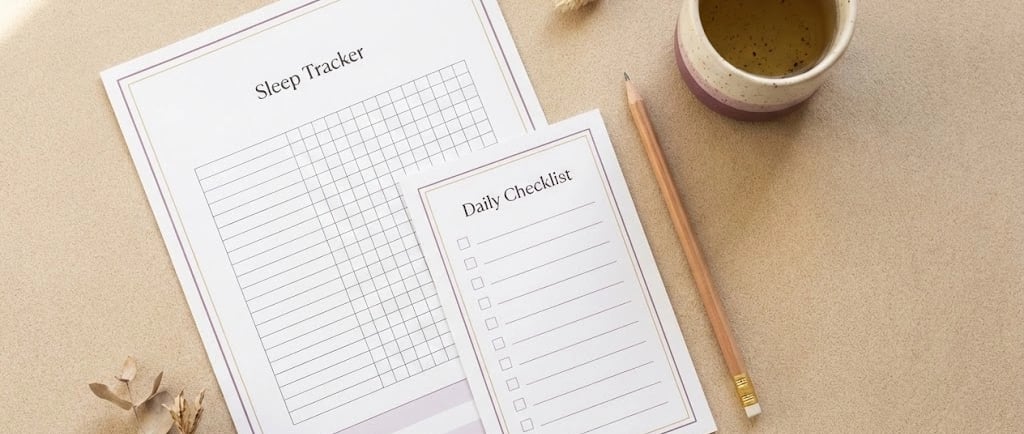
To move away from guessing, use a simple daily log for two weeks. This data is the most valuable tool you can bring to a doctor's appointment.
Middle-of-the-Night Log Checklist:
Sleep Quality (1–5): 1 is poor/unrefreshing, 5 is excellent.
Awakenings: Number of times you woke up.
3AM Wake-up (Y/N): Specifically, did you wake between 2 a.m. and 4 a.m.?
Night Sweats Severity (0–3): 0 is none, 3 is drenching (needing to change clothes).
Mood/Anxiety (0–3): Did you wake up with "racing thoughts"?
Energy (1–5): How did you feel the next afternoon?
Stress (0–5): Rate the overall stress of your day.
Caffeine: Number of cups and the time of your last cup.
Alcohol: Number of drinks and how many hours before bed.
Dinner Timing: Was it a "heavy" or "late" meal?
Notes: Any unusual events (travel, illness, late meeting).
Briefly, we use a 0–3 or 1–5 scale to make the data easy to scan for patterns without it becoming a chore.
If your 3AM wake-ups feel tied to stress, dinner timing, caffeine, or cravings, you’ll love the Perimenopause Nutrition Protocol—a 28‑day metabolic support manual (not a diet) with a printable Peri‑Plate builder bonus.
https://perimenopausecompass.gumroad.com/l/iecoc
What to try first (choose 1–2 changes only)
When we are exhausted, we often want to change everything at once. However, the best way to see what works is to test one variable at a time.
The Cooling Checklist: Set your bedroom to between $60^\circ F$ and $67^\circ F$. Use breathable bedding (cotton, linen, or bamboo) and sleep in layers. Keeping a bedside fan running can also provide white noise and airflow.
The 3AM Wake-Up Protocol: If you wake up, do not check the time or your phone. If you are still awake after about 20 minutes, get out of bed. Go to a different room, keep the lights low, and do something quiet (like reading a paper book) until you feel drowsy again. This prevents your brain from associating the bed with wakeful anxiety.
The Caffeine Cutoff Experiment: Try moving your last cup of coffee to before 10 a.m. or 11 a.m. for one week.
The "Early and Light" Dinner Test: Try finishing your last meal at least 3 hours before bed and avoid high-sugar desserts to stabilize blood sugar.
The Blood Sugar "Buffer" Snack: Some people find that a small, protein-rich snack before bed (like a few almonds or a piece of turkey) prevents middle-of-the-night cortisol spikes.
5-Minute Stress Downshift: Before bed, try 5 minutes of box breathing or progressive muscle relaxation to lower your "baseline" cortisol.
Morning Light exposure: Spend 10 minutes outside in the morning sunlight to help reset your circadian rhythm.
For more on managing temperature-related wake-ups, you may find our post on : https://perimenopausecompass.com/perimenopause-night-sweats-why-they-happen-how-to-manage helpful.
A simple 7-day experiment (step-by-step)
This is a focused way to see if a specific perimenopause sleep tips strategy actually works for you.
Days 1–2 (Baseline): Track your sleep exactly as it is now. Change nothing.
Days 3–7 (The Test): Choose ONE variable to change. For example: "No alcohol this week" or "Room temperature set to 65°F."
Evaluate: At the end of the week, look at your tracker. Did your 3 a.m. awakenings decrease? Did your sleep quality score go up?
The 7-Day Experiment Table
______________________________________
Disclaimer Education only — not medical advice. Consult a qualified healthcare professional for diagnosis and treatment.
Sources / References
Remember: Keep your notes short. Do not stack five changes at once, or you won't know which one made the difference.
Doctor-ready notes (bring this to your appointment)
When you speak with a clinician, having clear data helps them distinguish between normal perimenopause shifts and other potential issues like thyroid dysfunction or sleep apnea. You can copy and fill in this template:
My 14-Day Sleep Summary:
"For the last 14 days, I noticed I wake up around about [X] nights per week."
"My top 3 symptoms during these wake-ups are: [e.g., heat, racing thoughts, thirst]."
"My average sleep quality is [X] out of 5."
"I have tried [e.g., cutting caffeine, cooling the room] and noticed [X] result."
"My goal is to improve my daytime energy and stay asleep longer."
Questions to ask your clinician:
Based on my tracker, does this look like perimenopause-related sleep maintenance insomnia?
Could we rule out other causes like thyroid imbalances, iron deficiency, or sleep apnea?
Are there non-hormonal options that might help with my 3 a.m. anxiety?
Given my symptoms, what are the pros and cons of Hormone Replacement Therapy (HRT) for sleep?
Are there specific supplements (like magnesium) that you would recommend for my case?
If these lifestyle changes don't help in the next month, what is our next step?
Preparing for your visit with our (https://perimenopausecompass.com/perimenopause-symptoms-checklist-14-day-tracking-guide) can also be a great foundational step.
When to seek care sooner (red flags)
While sleep issues are common, some symptoms require more immediate medical attention. Please contact a clinician or urgent care if you experience:
Severe insomnia that makes it unsafe for you to drive or perform daily tasks.
Sudden, intense chest pain or shortness of breath.
Fainting or severe dizziness.
New or worsening symptoms of severe anxiety or depression.
Unexplained, rapid weight loss or persistent high fever.
Heavy, irregular bleeding that leaves you feeling extremely weak.
Frequently asked questions
Is waking up at 3AM a sign of perimenopause?
Yes, it is one of the most common complaints. It often results from the "perfect storm" of declining progesterone (the calming hormone) and a sensitive cortisol rhythm that peaks too early in the night.
How long does perimenopause insomnia last?
Every woman is different, but for most, sleep issues peak during the late transition (late perimenopause) and often stabilize 1–3 years after the final period once hormones reach a new, steady baseline.
Do night sweats cause 3AM wake-ups?
Frequently, yes. However, research also shows that many women actually wake up a few seconds before a hot flash occurs, suggesting the brain's internal temperature manager is triggering the awakening as part of the cooling process.
What’s the first thing to change for better sleep?
Most experts suggest optimizing your sleep environment first—keeping the room cool and dark—and then addressing triggers like alcohol and caffeine.
Should I track my cycle if my periods are irregular?
Absolutely. Tracking even irregular cycles can help you see if your sleep problems cluster around "low hormone" days, which can give your doctor clues about the best treatment.
When should I consider talking to my doctor about HRT?
If lifestyle changes and sleep hygiene are not providing relief, or if your quality of life is significantly impacted, it is worth a neutral, evidence-based conversation with a specialist. HRT is often effective for sleep when vasomotor symptoms (hot flashes/sweats) are the primary disruptor.
Conclusion
Waking up at 3am perimenopause is a challenging experience, but it is not a sign that your body is "broken." It is a sign of transition. By starting with a calm approach—tracking your patterns and testing small changes—you can reclaim a sense of agency over your rest.
Ready to get started? Your journey to better sleep begins with understanding your baseline.
Download the free 14-day tracker
If you are also experiencing mental fatigue during the day, read our related guide on : https://perimenopausecompass.com/perimenopause-brain-fog-symptoms-causes-solutions or visit our: https://perimenopausecompass.com/start-here page for more resources.
Perimenopause Compass
Contact
hello@perimenopausecompass.com
© 2026 All rights reserved.