
Perimenopause Tingling: Why It Happens & When to Worry
Perimenopause tingling can feel alarming — but it's more common than you think. Learn why hormonal shifts cause pins and needles, when it's harmless, and when to see a doctor.
LIFESTYLE
4/5/202612 min read
It starts as a pins-and-needles sensation in your fingertips. Or maybe it's a prickling feeling in your toes that comes out of nowhere. Sometimes it creeps up your arms or across your scalp like a gentle electric current.
You shake your hand, change position, wait for it to pass. Sometimes it does. Sometimes it doesn't.
And then the worry sets in.
Is this a circulation problem? A nerve disorder? Am I having a stroke? Why is my body doing this?
If you're a woman between 40 and 55 experiencing strange tingling sensations — and no one has been able to tell you why — there's a very good chance what you're experiencing is connected to perimenopause.
Tingling (also called paresthesia in medical language) is a real, recognized, but often overlooked symptom of hormonal transition. It doesn't mean something is catastrophically wrong. It means your nervous system is responding to fluctuating estrogen, changes in blood flow, stress, and sometimes nutritional shifts that happen during this stage of life.
This article will walk you through the causes, the science, what other women experience, and — most importantly — how to tell when tingling is just hormonal, and when it deserves medical attention.
This article is based on current medical knowledge and real-life experiences, but does not replace medical advice. If you experience sudden, severe, or one-sided tingling, weakness, confusion, or difficulty speaking, seek emergency medical care immediately.
What Does Perimenopause Tingling Actually Feel Like?
Tingling during perimenopause is notoriously hard to describe to a doctor — which is part of what makes it so isolating. Unlike a hot flash, which has clear language around it, tingling exists in a gray zone of vague neurological sensations that sound stranger when you say them out loud.
The Different Sensations Women Describe
Not all tingling feels the same. Women in perimenopause report a wide range of sensory experiences:
Pins and needles — the classic "my hand fell asleep" sensation, but without the obvious cause
Electric buzzing or vibrating — a low-level hum under the skin, often in the arms, legs, or scalp
Prickling or crawling sensations — sometimes described as "bugs crawling under the skin"
Warmth or burning — not painful, but an unusual heat sensation in specific areas
Numbness mixed with tingling — a dual sensation where part of the area feels "dead" while another part tingles
Scalp tingling — a common but little-discussed variant, often described as a "sparkly" feeling on top of the head
Facial tingling — usually around the lips, cheeks, or chin, which can be especially anxiety-inducing
The sensations can be fleeting (lasting seconds to minutes) or persistent (lingering for hours or even days). They can migrate — one day it's your left hand, the next it's your right foot.
Where Tingling Tends to Show Up
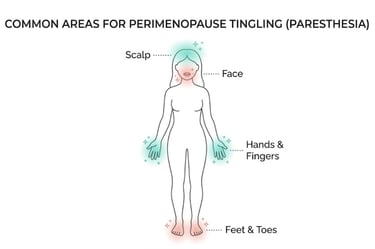
The most commonly affected areas include:
Hands and fingers (especially at night or first thing in the morning)
Feet and toes
Arms and legs (often described as traveling sensations)
Scalp and face
Tongue and lips (less common but deeply unsettling when it happens)
Some women experience tingling in just one location. Others describe it as migratory — moving around the body unpredictably.
The lack of a clear, consistent pattern can make it feel more frightening. But that unpredictability is actually characteristic of hormonal tingling.
Why Does Perimenopause Cause Tingling?
Tingling during perimenopause is not a single-cause symptom. It's the result of multiple intersecting systems — neurological, vascular, metabolic, and psychological — all responding to hormonal flux.
Estrogen, Nerves, and the Nervous System
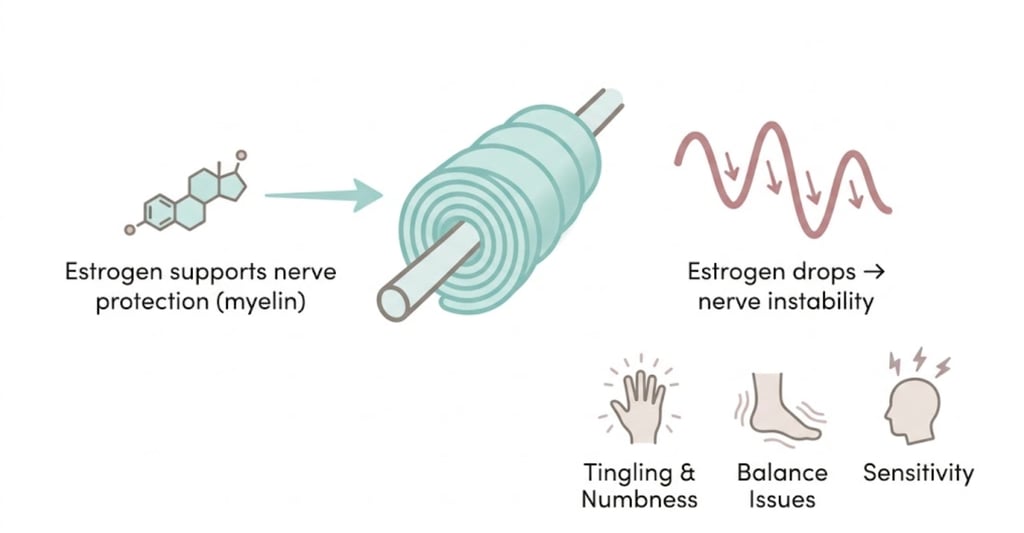
Estrogen has a direct protective and regulatory effect on nerve cells. Estrogen receptors exist throughout the central and peripheral nervous systems, where the hormone helps:
Maintain the myelin sheath (the protective coating around nerve fibers)
Regulate nerve signal transmission
Protect neurons from oxidative stress
Modulate pain and sensory perception
When estrogen levels fluctuate erratically — which is the hallmark of perimenopause — nerve function can become temporarily unstable. This can produce abnormal sensory signals, including tingling, buzzing, or prickling sensations.
Research published in journals like Neurology and Menopause has documented that women in the menopausal transition report increased rates of paresthesia, particularly in the extremities and face.
Circulation Changes and Blood Flow
Estrogen also plays a role in vascular health — affecting blood vessel elasticity, circulation, and microvascular function (the tiny blood vessels that supply nerves).
During perimenopause:
Blood vessels may constrict or dilate unpredictably
Circulation to the extremities can be temporarily reduced
Blood pressure regulation can become less stable
When blood flow to a nerve is reduced — even briefly — it can create tingling or numbness. This is the same mechanism that causes your hand to "fall asleep" when you sit on it, but in perimenopause it can happen without an obvious external cause.
Anxiety, Hyperventilation, and Sensory Symptoms
Perimenopause often brings new or worsening anxiety — sometimes directly triggered by hormonal shifts, sometimes in response to other symptoms, and often a combination of both.
Anxiety-related tingling is extremely common and happens through a very specific mechanism:
When you're anxious, your breathing pattern often changes. You may breathe faster or more shallowly (hyperventilation), even if you don't consciously notice it. This alters the balance of oxygen and carbon dioxide in your bloodstream, which can cause:
Tingling in the hands, feet, and around the mouth
Lightheadedness
A sensation of "unreality" or detachment
This is not psychosomatic in the dismissive sense. It's a real physiological response to altered breathing chemistry. The tingling is genuine — and it's also temporary and harmless once breathing normalizes.
For many perimenopausal women, the tingling itself becomes a source of anxiety, which creates a feedback loop: tingling → anxiety → altered breathing → more tingling.
Vitamin Deficiencies That Worsen During Perimenopause
Certain nutritional deficiencies are more common during perimenopause and can directly contribute to nerve-related symptoms:
Vitamin B12 — essential for nerve health and myelin production. Absorption can decline with age and is affected by certain medications (like metformin or PPIs).
Magnesium — supports nerve transmission and muscle relaxation. Stress depletes magnesium, and perimenopausal women are often under chronic stress.
Vitamin D — increasingly recognized as important for neurological function. Deficiency is widespread and often undiagnosed.
Iron — low iron (especially in women still having heavy periods) can cause restless legs and tingling sensations.
These deficiencies don't cause perimenopause, but they can amplify neurological symptoms that are already being triggered by hormonal shifts.


What Women Actually Experience
Real Patterns Women Report
In perimenopause forums, in clinical settings, and in our own reader feedback, these patterns emerge consistently:
"It comes and goes with no warning." The unpredictability is often the most distressing part. Women describe weeks of no tingling, then sudden onset for no apparent reason.
"It's worse at night or when I wake up." Many women report hand and arm tingling that's most intense in the morning or during the night — sometimes waking them from sleep.
"It started with other perimenopause symptoms." Tingling rarely appears in isolation. Most women also report hot flashes, brain fog, anxiety, insomnia, or heart palpitations.
"I've been tested for MS, diabetes, and B12 deficiency — everything came back normal." This is an almost universal experience. Women undergo neurological workups, bloodwork, MRIs — and when results are normal, they're often told "it's just stress."
"It's worse when I'm anxious or haven't slept." Nearly everyone notices that stress and poor sleep make the tingling more frequent or intense.
"I Thought I Was Having a Stroke"
This phrase — or a version of it — appears again and again.
And the fear is completely valid.
Sudden tingling, especially on one side of the body or in the face, is a known warning sign of stroke. When it happens for the first time, the rush of panic is normal, appropriate, and protective.
Here's what's important: If you've been evaluated medically and serious causes have been ruled out, and if the tingling is intermittent, bilateral (affecting both sides at different times), and not accompanied by weakness or confusion — it's very unlikely to be neurologically dangerous.
But the fear doesn't just evaporate because a doctor says you're fine. That emotional residue — the worry that something was missed, that it could still be serious — is a real and heavy burden.
You deserve validation for that fear, not dismissal.
What Science Says About Hormones and Nerve Function
Estrogen's Role in Nerve Health
The connection between estrogen and nerve function is well-documented in neuroscience literature:
Estrogen supports neuronal health by protecting nerve cells from damage, reducing inflammation, and promoting repair mechanisms.
Estrogen modulates neurotransmitters — including serotonin, dopamine, and GABA — which affect sensory perception and pain processing.
Fluctuating estrogen levels disrupt nerve signal stability, which can produce abnormal sensations like tingling, burning, or hypersensitivity.
Estrogen affects the autonomic nervous system, which controls blood flow, heart rate, and stress responses — all of which can indirectly influence sensory symptoms.
Research specifically examining paresthesia during the menopausal transition is limited compared to hot flash research, but the biological mechanisms are sound and increasingly recognized.
What's Established, What's Probable, and What's Still Debated
Transparency matters. The hormonal-neurological link is real and biologically plausible — but the research is still catching up to what women already know from lived experience.
Can Perimenopause Cause Tingling in Hands and Feet?
Why Extremities Are Commonly Affected
Yes — tingling in the hands and feet is one of the most frequently reported forms of perimenopause paresthesia.
There are several reasons the extremities are particularly vulnerable:
1. Peripheral nerves are more exposed.
The nerves in your hands and feet are farther from your central nervous system and more susceptible to circulatory changes, compression, and metabolic shifts.
2. Positional factors.
Sleeping positions, sitting posture, and repetitive movements (typing, holding a phone) can compress nerves in the wrists, elbows, or ankles — and hormonal changes may make you more sensitive to that compression.
3. Carpal tunnel syndrome worsens during hormonal transitions.
Fluid retention (common in perimenopause) increases pressure in the carpal tunnel of the wrist, compressing the median nerve and producing tingling in the thumb, index, and middle fingers — especially at night.
4. Temperature regulation changes.
Many perimenopausal women notice their hands and feet feel colder than usual, which can reduce circulation and increase tingling sensations.
If your tingling is predominantly in your hands and feet, is worse at night, and improves with movement or shaking out your hands, carpal tunnel or positional nerve compression is likely playing a role alongside hormonal factors.
Can Perimenopause Cause Numbness and Tingling?
Tingling vs. Numbness — What's the Difference?
These terms are often used interchangeably, but they describe distinct sensory experiences:
Tingling (paresthesia) = an abnormal sensation (pins and needles, buzzing, prickling) where there shouldn't be one
Numbness (hypoesthesia) = a reduction or loss of normal sensation — a "dead" or "disconnected" feeling
Both can occur during perimenopause, and they often happen together. For example, a woman might describe her hand as "numb and tingly" — meaning part of it feels absent while another part feels hypersensitive.
The combination of numbness and tingling is common in conditions like:
Carpal tunnel syndrome
Cervical spine compression
Peripheral neuropathy
Vitamin B12 deficiency
If you're experiencing persistent numbness (especially if it doesn't fluctuate or improve), it's important to be evaluated medically — even if other perimenopause symptoms are clearly present.
Is Perimenopause Tingling Dangerous?
When Tingling Is Hormonal and Harmless
In the vast majority of cases, perimenopause-related tingling is uncomfortable and unsettling, but not medically dangerous. It tends to:
Come and go unpredictably
Affect both sides of the body (not always at the same time, but symmetrically over time)
Improve with movement, stress reduction, or better sleep
Coincide with other recognizable perimenopause symptoms (hot flashes, brain fog, anxiety, insomnia)
Not be accompanied by weakness, loss of coordination, or changes in vision or speech
Hormonal tingling can feel alarming — but it's a sensory glitch, not a structural emergency.
Red Flags That Require Immediate Medical Attention
Seek emergency care if you experience:
Sudden tingling on one side of the body only (face, arm, leg)
Tingling with weakness, difficulty speaking, or facial drooping (stroke warning signs)
Severe headache with tingling (especially if sudden and unlike your usual headaches)
Loss of coordination or balance with tingling
Tingling with chest pain, shortness of breath, or rapid heartbeat
Bowel or bladder dysfunction with leg numbness/tingling (possible spinal cord issue)
Schedule a non-urgent medical evaluation if:
Tingling is constant and not improving over several weeks
Numbness is progressive (getting worse or spreading)
You have a personal or family history of autoimmune or neurological conditions
Tingling is accompanied by unexplained weight loss, extreme fatigue, or other systemic symptoms
Perimenopause tingling is real — but so are neurological conditions that need treatment. Getting evaluated doesn't mean you're overreacting. It means you're being responsible.
How Long Does Perimenopause Tingling Last?
The timeline varies from woman to woman, but general patterns include:
Individual episodes can last seconds, minutes, or hours. Some women experience brief flashes of tingling; others describe it persisting for days.
The symptom overall tends to be most active during mid-to-late perimenopause, when hormonal fluctuations are most erratic.
Many women report improvement as they transition into postmenopause and hormone levels stabilize.
Some women find relief with hormone therapy (HT), though results vary and tingling isn't always a primary indication for starting HT.
Lifestyle interventions — particularly stress management, B-vitamin supplementation, and improved sleep — can reduce both frequency and intensity within weeks.
For most women, this is a phase, not a permanent condition. But that doesn't make it easier when you're in the middle of it.
10 Gentle Ways to Manage Perimenopause Tingling
These strategies address the multiple systems involved in tingling — neurological, vascular, metabolic, and emotional.
Support Your Nervous System with Nutrition
1. Check your B12 levels.
Request a blood test from your doctor. If you're low or low-normal (under 400 pg/mL), consider supplementation. B12 deficiency is a common, reversible cause of tingling and numbness — and it's often overlooked.
2. Supplement with magnesium.
Magnesium glycinate (200–400 mg daily) supports nerve function, muscle relaxation, and sleep quality. Avoid magnesium oxide, which is poorly absorbed and can cause digestive upset.
3. Ensure adequate vitamin D.
Get your levels tested. If you're deficient (under 30 ng/mL), supplement with vitamin D3. Many women need 2,000–4,000 IU daily to reach optimal levels.
4. Eat anti-inflammatory, nerve-supportive foods.
Prioritize omega-3 fatty acids (salmon, sardines, walnuts, flaxseeds), leafy greens, berries, and foods rich in B vitamins (eggs, poultry, legumes, whole grains).
Improve Circulation and Reduce Nerve Compression
5. Move regularly throughout the day.
Sitting for long periods reduces circulation and increases nerve compression. Set a timer to stand, stretch, and walk for 2–3 minutes every hour.
6. Stretch your wrists, neck, and shoulders.
If you work at a computer, wrist and neck stretches can reduce carpal tunnel and cervical nerve compression. Gentle yoga or physical therapy exercises can be especially helpful.
7. Adjust your sleep position.
If tingling is worst at night or upon waking, you may be compressing nerves while you sleep. Avoid sleeping with your arms overhead or your wrists bent. Consider a neutral wrist brace if hand tingling is severe at night.
Calm Anxiety and the Hyperventilation Connection
8. Practice slow, diaphragmatic breathing.
When you notice tingling — especially if it's around your mouth, hands, or feet — pause and breathe slowly: 4 counts in through your nose, 6 counts out through your mouth. Repeat for 2–3 minutes. This can stop anxiety-driven tingling in its tracks.
9. Address underlying anxiety.
If anxiety is a frequent co-symptom, consider cognitive behavioral therapy (CBT), mindfulness practices, or discussing treatment options with a healthcare provider. Treating the anxiety often reduces the tingling.
When to Seek Medical Evaluation
10. Get a thorough workup if tingling persists.
If your tingling is constant, worsening, or significantly affecting your quality of life, ask your doctor to evaluate:
Vitamin B12, folate, iron, magnesium, vitamin D levels
Thyroid function (hypothyroidism can cause tingling)
Fasting glucose and HbA1c (to rule out prediabetes or diabetes)
Nerve conduction studies (if carpal tunnel or peripheral neuropathy is suspected)
Cervical spine imaging (if neck issues are suspected)
Discussion of hormone therapy (HT), which may help stabilize neurological symptoms in some women
You deserve answers, not dismissal.
Frequently Asked Questions
Is tingling a symptom of perimenopause?
Yes. Tingling (paresthesia) is a recognized but under-discussed perimenopause symptom. Fluctuating estrogen affects nerve function, circulation, and sensory perception, which can produce pins-and-needles or buzzing sensations in the hands, feet, face, or scalp.
Can perimenopause cause tingling in hands and feet?
Yes. The hands and feet are the most commonly affected areas. Hormonal changes can alter circulation and nerve sensitivity, and fluid retention during perimenopause can worsen conditions like carpal tunnel syndrome.
Can low estrogen cause tingling?
It can. Estrogen supports nerve health and protects the myelin sheath around nerves. When estrogen levels fluctuate or decline, nerve signal transmission can become unstable, producing abnormal sensations including tingling.
What does perimenopause tingling feel like?
It varies. Some women describe pins and needles, others a buzzing or vibrating sensation, and some experience crawling or prickling feelings. It can be brief or persistent, localized or migratory.
How long does perimenopause tingling last?
Individual episodes can last seconds to hours. The symptom overall is often most active during mid-to-late perimenopause and typically improves as hormone levels stabilize into postmenopause. Lifestyle and nutritional interventions can reduce severity significantly.
Should I worry about tingling during perimenopause?
Fluctuating, bilateral tingling during perimenopause is usually hormonal and not dangerous. However, sudden one-sided tingling, tingling with weakness or confusion, or persistent worsening tingling should be evaluated medically to rule out stroke, neuropathy, or other conditions.
You're Not Imagining This — and It Doesn't Mean Something Terrible Is Wrong
If you've been lying awake at 3 AM with your hand tingling and your mind racing through worst-case scenarios — please know you're not alone.
Tingling is one of the more frightening perimenopause symptoms because it feels neurological. It feels serious. And when doctors can't find a clear cause, it's easy to spiral into fear that something was missed.
But here's the truth: perimenopause tingling is real, it's explainable, and it's almost always temporary.
Your nervous system is navigating a massive hormonal recalibration. Estrogen — which has been protecting and regulating your nerve cells for decades — is fluctuating wildly. Your body is adapting, but the adaptation isn't always smooth.
That doesn't mean nothing is happening. It means something specific is happening, and it has a name.
You're not too anxious. You're not imagining it. You're in perimenopause, and your symptoms — all of them, including the strange ones — deserve to be acknowledged.
Start with the basics: B12, magnesium, sleep, stress management, movement. If tingling persists or worsens, advocate for thorough medical evaluation. Bring this article. Bring your questions. Bring your notes.
You deserve answers. You deserve care. And you deserve to feel safe in your own body again.
Ready to take the next step?
(https://perimenopausecompass.com/free-14-day-tracker) to find your personal triggers.
Get the Perimenopause Nutrition Protocol to support your nervous system from the inside out.
Visit our (https://perimenopausecompass.com/start-here) page for more foundational guidance.
Get the Perimenopause Nutrition Protocol ($29 + bonus) → https://perimenopausecompass.gumroad.com/l/iecoc
______________________________________
Disclaimer Education only — not medical advice. Consult a qualified healthcare professional for diagnosis and treatment.
Sources / References
Perimenopause Compass
Contact
hello@perimenopausecompass.com
© 2026 All rights reserved.